'Chinamaxxing': Why Western youth are fascinated by 'Cool China'
The term "Chinamaxxing" (极致中国化; jízhì Zhōngguóhuà) has become a viral sensation on overseas social media platforms such as TikTok and Instagram over the past several months. By adding the gaming-inspired slang suffix "-maxxing," which means maximizing a specifically desired quality, ability, skill or activity, to "China," Western netizens — especially Generation Z — have coined a new buzzword for adopting elements of Chinese lifestyle, culture and aesthetics into their daily life.
Typical examples include starting the day with a cup of hot water, wearing slippers at home, or practicing traditional Chinese wellness exercise baduanjin. Creators post videos about their being in a "very Chinese time" of their lives under such hashtags as #Chinamaxxing, #VeryChinese, #ChineseWellness, #ChinaTravel and #BecomingChinese, pulling in numerous views.
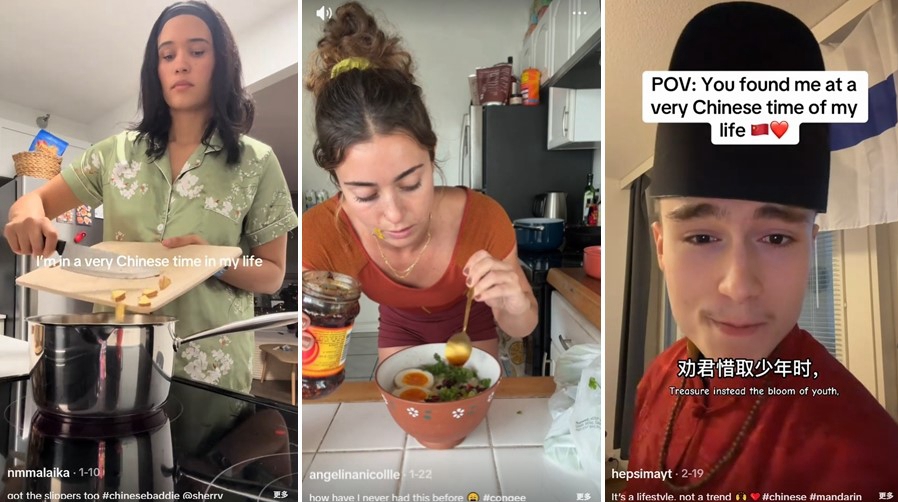
TikTok users share their "Chinamaxxing" experiences. [Screenshots from TikTok]
The "Chinamaxxing" phenomenon has sparked widespread discussion among Western media, with the most common refrain attributing the China fever to the dimming of the American Dream. According to a CNN report, "experts say the trend reveals deeper undercurrents like dissatisfaction among many Americans with life at home — from political turmoil, gun violence, immigration crackdowns and persistent racial tensions." Meanwhile, the New York Times carried a piece claiming: "While 'Chinamaxxing,' users seem to be processing anxieties about the decline of their own country." An opinion piece in the New York Post goes one step further, saying that "it's about Gen Z's desperation to shed their American identity," denouncing many of the influencers praising Chinese culture for "aesthetically, morally and politically defecting to another superpower." An opinion piece from The Washington Post jumps to assert that "Chinese cultural products' lack of mainstream global appeal means that 'Chinamaxxers,' absent other enticing ways to immerse themselves in all things Chinese, will eventually move on."
Certain Western media outlets have long been accustomed to slandering and belittling China, while maliciously framing the country as a "threat" or "adversary" to create Sinophobic sentiments out of geopolitical calculations.
Today, we are living in an increasingly interconnected world where people's passion for cross-cultural communication and exchange is palpable everywhere. Despite this, some Western commentators still cannot stop viewing cultural exchange and engagement through a purely political lens, anxious as they are about losing their monopoly over public discourse.
That is why such media refuse to acknowledge that Chinese culture has profound historical connotations, unique appeal and strong vitality. They even escalate the embrace and appreciation of other cultures by Western Gen Zers to the level of treason, claiming that the "Chinamaxxing" wave is surface-level and will be short-lived.
It is true that some young Western people might feel less secure and disappointed with life at home, but this absolutely does not mean they are changing their nationality or betraying their countries. Just as British freelance writer Coco Khan observed: "Instead of hectoring gen Z about not 'loving their country' as the rightwing press would like them to, offer them credible pathways to stability, and maybe a fair shot at surpassing — or at least matching — the standards of living enjoyed by their parents."
Digital technology has profoundly transformed the world, and social media use continues to surge globally, enabling younger Westerners to connect directly with Chinese netizens and see an authentic China which is completely different from that which some Western media and politicians have sought to portray. In early 2025, the TikTok ban threat led a huge number of young American users to move to Chinese social media app Xiaohongshu, or RedNote, creating a large-scale digital encounter for real-time cross-cultural dialogue and interaction with their Chinese counterparts. There, they experienced China's genuine culture, history and daily life, no longer through the old Western narratives, and breaking the common stereotypes about the country.
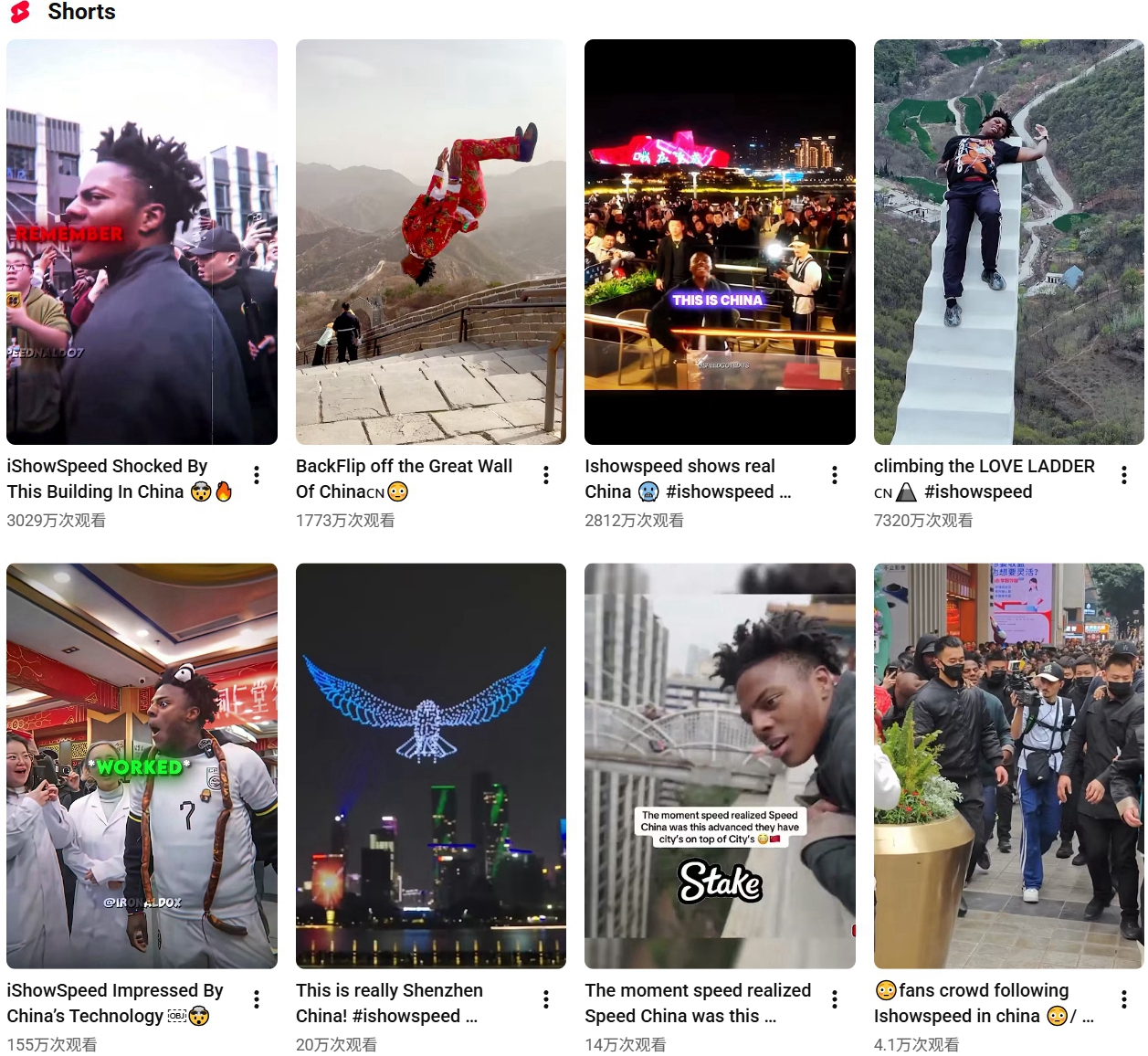
Video clips of U.S. YouTuber IShowSpeed's tour of China in 2025. [Screenshot from YouTube]
The Chinamaxxing wave, indeed, is more than a fleeting curiosity or a superficial internet meme; it reflects a shift in how Western youth perceive and resonate with China's cultural diversity, traditional philosophy and social development. In most countries, younger people have more favorable opinions of China than older people, according to the latest Pew Research Center survey of 25 countries.
They see an unfiltered "Cool China" on social media through their Chinese counterparts' videos of daily life: China's extensive high-speed rail network makes travel more efficient and comfortable for millions of people; high-tech products, including electric vehicles, novel electronic gadgets, open-source AI models like DeepSeek, and humanoid robots, leave deep impressions on them; cyberpunk cities like Chongqing with their futuristic vibe have wowed numerous global viewers; the surging digital economy, spanning online shopping, drone deliveries, ride-hailing and e-payment, is reshaping the very fabric of daily life; and visitors comfortably explore areas after dark, as China has one of the world's lowest rates of crime, homicide and gun incidents. The country is ranked as the third-safest globally based on public perception of safety in the U.S.-based Gallup 2025 Global Safety Report.
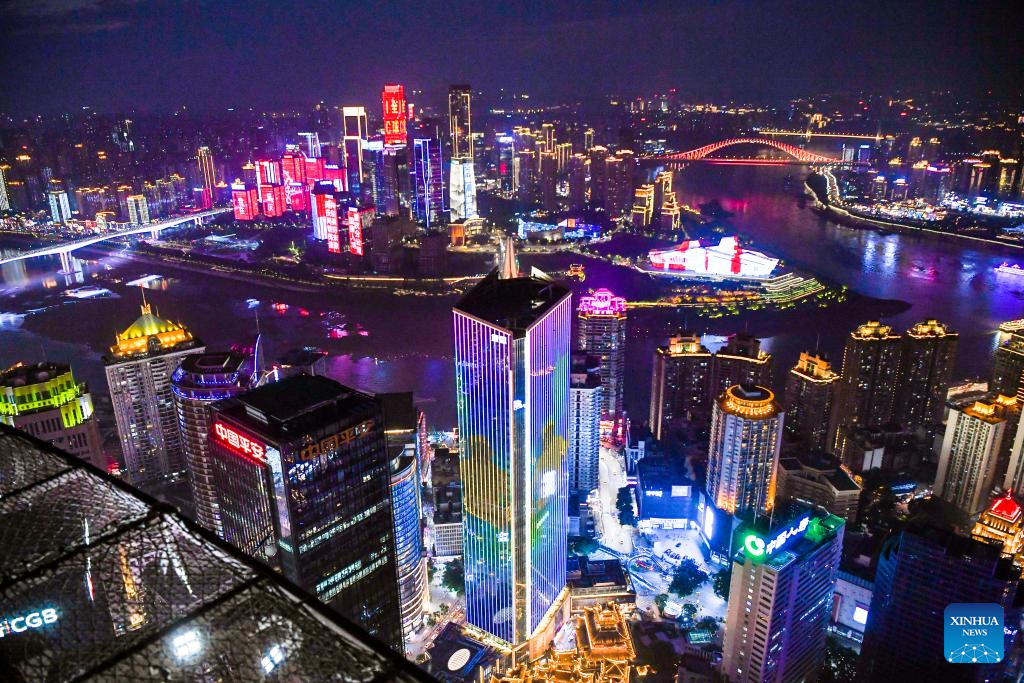
A night view of the southwestern municipality of Chongqing, May 30, 2024. [Photo/Xinhua]
China's cultural appeal is rising globally, driven by a fusion of ancient traditions and modern creativity. From the video game Black Myth: Wukong, to animated movie "Ne Zha 2," micro-dramas, Labubu dolls, Mixue Ice Cream & Tea, and guochao "China-chic" products, innovative Chinese cultural brands are increasingly gaining global popularity.
According to the Global Soft Power Index 2026 released by London-based Brand Finance in January, China consolidated its second place and is the only nation brand in the top 10 to increase its soft power score this year. The report says that "audiences now engage with China not only as a strategic actor but also as a country offering approachable experiences and cultural resonance." The Chinamaxxing trend is a vivid manifestation of this judgement, showing global youths' reflection on and aspiration for certainty, wellness and connection through experiential validation. It enables them to witness the charm of Chinese culture by dissolving ideological barriers and long-standing misinterpretations, and helps enhance mutual respect, understanding and learning between Chinese and Western civilizations.
As China spurs efforts to expand visa-free policies, facilitate inbound travel and improve tourism services, more foreign travelers, influencers and content creators like U.S. YouTuber Darren Jason Watkins Jr, better known as IShowSpeed, and Italian-Senegalese influencer Khaby Lame, are exploring the country at a deeper level. Their videos showcase a China that is open, dynamic, stable and reliable, sparking greater interest, engagement and participation in the "China fever" trend from Western society.
It is time for certain Western critics to abandon manufactured anxiety and narrow-minded mentality, and learn to perceive different cultures properly with an open and inclusive attitude. Cultural exchange is not a zero-sum game, but a two-way interaction based on equality and mutual respect for enhanced understanding to create a world where diverse cultures can coexist and thrive.